Fragment #29

The mariner is dead but his head

            sings on

His story is now an instrument

            of the instrument

Afraid he’ll forget if it stops

            not knowing

How the curse started afraid

            it will stop

Poetry Disclaimer

Along with its needed effects, this poetry may cause some unwanted effects. Although not all of these side effects may occur, if they do occur they may need some attention.

It is very important that the doctor check your progress. This will allow the doctor to see if the poetry is working properly and to decide if you should continue to consume it. Blood and urine tests may be needed to check for unwanted effects.

This poetry may raise your risk of having a heart attack or stroke. This is more likely in people who already regularly consume poetry (as well as some LITERARY fiction). People who use this poetry for a long time might also have a higher risk.

This poetry may cause bleeding in your stomach or intestines. These problems can happen without warning signs. This is more likely if you have had a poetry induced stomach ulcer in the past, or if you smoke or drink alcohol regularly while consuming this poetry.

Serious skin reactions can occur with this poetry. Stop using this poetry and check with the doctor right away if you have any of the following symptoms while using this poetry: blistering, peeling, or loosening of the skin; chills; cough; diarrhea; fever; itching; joint or muscle pain; red skin lesions; sore throat; sores, ulcers, white spots in the mouth or on the lips; or unusual tiredness or weakness.

Using this poetry during the later part of pregnancy can harm your unborn baby. If you think you have become pregnant from using this poetry, tell the doctor right away.

Tell the doctor if you have unexplained weight gain or edema (fluid retention or body swelling) with this poetry.

Before having any kind of surgery or medical tests, tell the doctor that you are using this poetry.

Some possible warning signs of serious side effects that can occur during the active consumption of this poetry may include black, tarry stools; decreased urination; severe stomach pain; skin rash; swelling of the face, fingers, feet, or lower legs; unusual bleeding or bruising; unusual weight gain; vomiting of blood or material that looks like coffee grounds; or yellow eyes and skin. Also, signs of serious heart problems could occur such as chest pain, tightness in the chest, fast or irregular heartbeat, or unusual flushing or warmth of the skin. Stop using this poetry and check with the doctor immediately if you notice any of these warning signs.

See your local bookseller today and get this poetry!

And the dream?

What was the dream? It’s hard to remember now the response which seemed so logical then, or what it was in response to. Movement happens and you think what you think to get in, or get out.

The state of the dream is this: I only remember it in scattered passages. They come and go, a myth assembling and dissembling itself. I know I had a dream, but I may not recognize it in a lineup.

Was the dream merely to do a set of actions, or to accomplish a set of goals? I have to say it was to do a set of actions. And those actions we have done.

“Born into this, out of this.” Though I am necessarily in this milieu, I am not of it. I am a blue collar worker. When I traded in my oscilloscope and voltmeter for an MFA, nothing changed. I am a blue collar poet and publisher, and I go about life, as a friend said recently, like we’re living in the depression.

Everything I have done in this business I have done on my own, with much help. Yes, the summer of 2009 is when we embarked onto the world with a vision and a plan, but that track was laid as early as 2003.

The pieces began to come together at my first AWP conference in 2004. Sy Hoahwah and I drove to Chicago because the writing program gave us money to go, a considerable amount of money. I drove all night and we got there at sunrise. I was completely sober and intently focused at that conference, and I saw many things and was transformed.

I saw how small the writing community is in this country. My undergrad poetry mentor, a poet of some acclaim, met up with me and my new grad school friends. I was by far the oldest of the grad school group, and being the only one of us who was married and that I had a small child at home, I felt even older. For a little while none of that mattered. My mentor, and some notable writer friends he studied with in the University of Virginia MFA program, hosted us at an old Italian restaurant in the heart of downtown Chicago. There must have been a dozen of us crammed around the undersized table in the private back room. There was a plain black phone on the wall in the room. It was a direct line to the server. This back room was said to be where the performers from the opera would dine after their shows.

Everybody relaxed after a couple of wine bottles were opened. We snacked on the bread with olive oil and cheese while we waited for the few plates of pasta we would share. My mentor kept the conversation going by asking my new friends questions about where they were from and how each ended up at the Arkansas MFA program. Some of my friends were awe struck by my mentor’s MFA buddy. Him and his wife lived part time in Chicago and were staying out by Wriggly Field. They had taken the train downtown to have dinner with us. After that dinner, it seemed my grad school friends looked at me more like someone who may belong, or maybe I had just started to see myself that way. I think when they saw how much my mentor respected me and my point of view, they decided to give me the benefit of the doubt. In either case, I decided it was cool to bring writers together.

Sy told me something important on the drive back to Fayetteville, as we stuffed our faces with real Chicago pizza:

“No offense, but I don’t know who the Chris Pappas who lives in Fayetteville is, but that Chris Pappas who was in Chicago is the real Chris Pappas. It was obvious to everyone but you.”

I thought deeply (mindlessly) about this for the rest of the drive, as Sy snored in the passenger’s seat. I decided I needed a change in my personal life. When I got home, my wife (who was my second wife) sat me down and started to explain, through a long, convoluted explanation, that she wanted to move out and be separated for a while. During this entire speech I sat quietly and tried to restrain my jubilation, tried to act confused, tried to seem upset. And when she was finished, I said, “Okay.” And we were finished. In March of 2004 (seven months after arriving in Fayetteville) I got my own house for the first time since my last divorce, and only the second time ever. My life changed quickly after that.

Since arriving in Fayetteville, I had been clean cut and clean shaven up to that point. I had not worn a beard in five years because I worked at a restaurant that did not allow facial hair, but I started to let it grow and kept it for the next five years. I let my hair grow unimpeded for the next few years also, and before long I looked the way I imagined myself. Over the next year the true transformation happened gradually, and painfully, gleefully. I became less certain about everything, especially poetry and people. I immersed myself in teaching, and taught my first seven semesters in graduate school, including two summer sessions that first summer, without a break.

These changes were not seen as positive by some people. Davis McCombs, the director of the Arkansas writing program, told me during a heated discussion in his office that when he first met me he thought I was a good poet and a good person, but “now I know you are neither.” I told him he cared more about tenure than about poetry and that he treated graduate students like undergrads due to his fear that some of us knew more about poetry than he did. This argument arose partially because of a contentious conference I had with Maurice Manning (whom I would publish in the second issue of Mêlée a few years later) while Manning was visiting our program. The exchange I had with Manning had embarrassed Davis. Davis and I also had a disagreement about the virtues (or non-virtues) of Li Young Lee’s poetry in class during a presentation I gave on Lee. He gave me an “F” on the presentation.

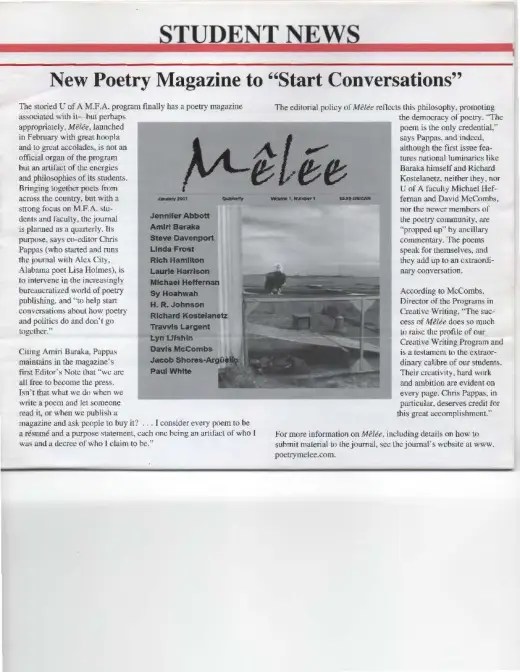
Davis later recanted and changed that grade, admitting that he overreacted. Our dispute eventually subsided because of the launch of Mêlée during my fourth and final year of grad schoolI had asked some of the faculty and students for work for the first issue, but the magazine was not a student magazine, nor was it an Arkansas magazine. It was a national success due to the time and money we (Lisa Holmes, the student contributors and myself) put into publicizing it (providing two free subscriptions to every writing program in the country—over 400 programs at that time—and staging two high profile readings in Fayetteville and at the Atlanta AWP in 2007), and most of the students from the program published in that issue have gone on to do great things and achieve recognition on a large scale. I had resisted asking Davis for work out of spite, but decided this was the opportunity to prove I was the better man. So I approached him in his office and asked if he would be willing to submit something, and he replied, “I thought you’d never ask.” There was a feature on Mêlée in the department newsletter in the spring of 2007 in which Davis was quoted as follows:

“The success of Mêlée does so much to raise the profile of our Creative Writing Program and is a testament to the extraordinary calibre of our students. Their creativity, hard work and ambition are evident on every page. Chris Pappas, in particular, deserves credit for this great accomplishment.”

The Vancouver AWP in 2005 was a turning point for me. After I had discovered the year before how much money the program would give us to go to conferences, I shared that news with my classmates and successfully convinced a large group (over twenty of us) to travel to Vancouver and take advantage of the opportunity. The program allotted each one of us up to $1100 to travel to the conference, and if you said you had no credit card to put the expenses on, they would give you half of the money up front in cash. We each had a meal per diem of $98 a day. Along with meals, we had air fare covered, hotel, cabs, and conference expenses. The air fare was about $550, and we all crammed into a few rooms, so each of us was left with about $500 to spend for the weekend trip. None of the other writers at the conference could believe how much we got. Not even the full professors we encountered received anything close to what we did. The administrators changed the conference funding policy after that year, mostly because a fellow student who did not get his paperwork in on time, and therefore could not join us, heard how much fun we had and told on us.

On the flight to Vancouver there was a buzz about us. Most of us were on the same flight, but we were scattered all over the plane, infecting the people with energy and imagination.

[to be continued]

The Mystic Thread in James Joyce’s Ulysses

Library shelves are over-weighted with books about Ulysses. The James Joyce novel, which was banned in this country from the time of its publication in 1922 until the Supreme Court ruled that it was not obscene in 1933, invites many interpretations due to its wide-reaching style and complex themes. The title points to the most apparent theme, a well-crafted parallel of the trials of Ulysses in the Homeric Epics: The Iliad and The Odyssey. However, there are countless other interpretations that include, but are not limited to, mainstream Christian messianic themes, Greek and Roman mythological themes, and a comprehensive collection of Shakespearean allusion.

William York Tindall claims, in A Reader’s Guide to James Joyce, that the following summation is implicit: “Clearly, the theme of Ulysses, implied by the quest and determined by the characters, is moral” (125). However, Tindall fails to prove this abrupt conclusion and indeed highlights its inherent contradictory nature, given the scope of the characters’ actions, by beginning the very next paragraph with the following: “Plainly moral in theme, Ulysses, nevertheless, is not plainly moral” (125). This type of semantic mirroring is a classic example of the problem that one encounters in any attempt to categorize, characterize, or rationalize Joyce’s epic. But, its uniquely expansive structure does invite one particular reading that is richer for the inherent ironies burried within the text. That reading is one of Christian mysticism in the tradition of the Pseudo-Dionysius and Thomas Aquinas; the multiple layers of the text (consciousness and experience) parallel the mystical dichotomy of the individual and the universal as they relate to each other in apparent tension, which is eventually resolved, however, in a complete annihilation of apprehension.

This appraisal is further enhanced by the influence of Giambattista Vico and his theory that history is a cyclical and reoccurring entity. Joyce explores this avenue of thought, which is tagged as “Vico road” (20) in the text (a real street in Dublin).

Vico’s theories are generally seen to have influenced the structure of Ulysses, as well as Finnegan’s Wake. Tindall claims that “the general structure of Ulysses is cyclical. Mr. Bloom leaves his home and returns to it. Meanwhile, incidental references form epicycles upon the main design or help to indicate its shape” (70). This parallel seems to be a valid comparison. However, Stephen Dedalus becomes profoundly anti-religious and “Vico was a pious Catholic” (70).

Vico’s influence on the experimental structure of the novel is apparent, but his belief that God “is unknowable” (James Joyce 70) is problematic to a thesis which assumes that the novel’s primary driving force is a subdued mysticism. Vico “sought to promote Christian ideals even as he compromised them” (Hofheinz 56). This is one intersection where Joyce forks off of Vico Road, because his mysticism is not Christian by design, but by necessity.

Of the Christian mystics, Joyce states in a diary: “They interest me. In my opinion they are writing about a very real spiritual experience . . . and they went about it with a subtlety I don’t find in many so-called psychological novels” (Jaurretche 9). Although Joyce himself, like Stephen, spent his life waiting for the dumb to speak, his writing carries a decidedly Catholic message due its inherent mysticism.

According to Tindall, “Thomas Merton, whose poems are Joycean, says that Joyce helped convert him to Catholicism” (James Joyce 3). Merton went on to become one of the most influential modern Christian writers. He would become a Trappist monk who also wrote and spoke widely on Eastern philosophy and religion.

In a collection of essays edited by Brian Nolan, W. B. Stanford explores the possible origins of this mystical thread in Ulysses. He cites the following comment made by Joyce from Zurich in 1917:

                        “. . . I was twelve years old when I studied the Trojan War but the story of Ulysses alone remained in my recollection. It was the mysticism that pleased me . . .” (Stanford 62).

After some necessary discussion of mysticism in the general sense, Stanford settles on a definition for mysticism in Homer as “spiritually allegorical, of occult meaning” (62). These allegorical suppositions were naturally inferred by later readers, but not necessarily intended by Homer. Stanford points out that it was the Neo-Platonists who sought out the allegorical features imbedded in the text: “The wanderings of Ulysses became one of their favorite symbols for the vicissitudes of the soul among the phenomena of the physical world” (63).

The idea of the wandering soul can be traced throughout the text of Joyce’s Ulysses. There is consistent wavering to and from the interior monologue, which is a reflection of the exterior action depicted in the narrative portions of the book. “Although [Joyce] did not invent the stream of consciousness, he made it a usable technique” (James Joyce 3). In the mind of Stephen Daedalus, the “soul is in a manner all that is: the soul is the form of forms” (Joyce 21). Joyce claims, in a platonic sense, that the soul is the only true thing, and therefore, if there is a God, man must be inexorably linked to him, or man must be God subdued by consciousness.

In his stream of consciousness style of writing, Joyce illustrates the problem of communicating an interior truth via the exterior expression of language: “These heavy sands are language” (37), Stephen thinks as he stands on the strand, contemplating “the simple pleasures of the poor” (39). His mind rambles on: “The truth, spit it out. I would want to. I would try” (38). The problem is still apparent, however, because even if Joyce manages to rise above the mire that is language, without readers who are devoted to a non-semantic absorption of the text, there is still no achievement beyond the usual achievement one may hope for from literature.

The sticky issue here is one of attempting to define the divine in mankind without losing the humanity of human being. Tindall points out that “while Vico’s Providence, residing in the mind of man and acting through it, is ostensibly divine, it is implicitly human” (77). When each is faced with the same problem, Joyce and Vico come to very different conclusions due to their different preconceptions of humanity and its nature, or God and its nature.

“Piety kept Vico from seeing the humanity of his design. Skepticism and the aid of Jung, perhaps, enabling Joyce to pursue Vico’s implications to their logical end, transformed divine Providence into archetypal pattern or racial memory” (James Joyce 77).

Therefore, the same defiant nature which causes Stephen so much trouble in A Portrait of the Artist as a Young Man, is ironically what eventually compels Joyce to break free of the standard morality, and to achieve a level of artistry which had not yet been achieved, not even by Vico.

In The Sensual Philosophy, Colleen Jaurretche explores the implications of Joyce’s mysticism, as well as their inevitable conclusions. According to Jaurretche, critics have long used Joyce’s interest in theological history and practice as evidence for his belief and his unbelief (3).

Jaurretche continues, to claim that Joyce’s writing approaches the question of mysticism and art from a striking perspective:

“In his commitment to creating the figure of the mind on the uncreated background of the page Joyce infuses the structures of medieval culture and mysticism with the ability to surmount ordinary distinctions of being and knowing, mind and body, and sees in this philosophy the most radical form of representation” (13).

In this form, his art (the ability to spiral through consciousness and experience) mimics the distinction between the ephemeral and the eternal, the individual and the godhead. While Vico approaches God solely through his own mind, believing that “piety and rationalism could marry” (Hofheinz 57), Joyce takes a negative approach through his art. This approach places emphasis on God through the senses, “thus mental interiority comprises the most supreme reality” (Jaurretche 13).

This juxtaposition of the Great Void with the Great Reality opposes the observance of traditional Christian ritual practiced by mystics such as Francis of Assisi or Theresa of Avila, for their approach centers on “affective devotion, emotional expressiveness, and theology of love” (Jaurretche 13).

Instead Joyce, like Pseudo-Dionysius the Areopagite, “explores how the mind comes to know obscurity” (Jaurretche 15) through scattered images like the following from Joyce’s Ulysses: “Dead noise. Akasic records of all that ever anywhere wherever was” (118). Stuart Gilbert calls this statement by Stephen “a reminder of the indestructibility of thoughts and words” (Gilbert 189). It is not the reference to such a belief that stands out, but that these thoughts, which have been “preserved with imperishable perfection” (Gilbert 189) are referred to as “dead noise” (Joyce 118) by Joyce via Stephen’s consciousness. The implications of this comparison lead the reader to a conclusion that is purely mystical, in that the thoughts of all of human history are eternally reverberating in silence, or endless background noise which becomes unnoticeable, and unknowable.

This conclusion is similar to that of the monk known as the Pseudo-Dionysius (who was for a long time believed to have been a convert of Paul–the Biblical Saul of Tarsus–but was later thought to be a Neo-Platonist), whose “works profoundly influenced the aesthetics and philosophy of the Middle Ages and permanently inscribed their vision and understanding of God” on many of those who would become the most influential Christian writers, such as Thomas Aquinas (Jaurretche 14). Pseudo-Dionysius obviously influenced Joyce as well in that his “spiritual hermeneutics instruct Joyce in the incursively designed language of bodily sleep and mental acuity, thus conceptually reconstructing ordinary concepts of the perceiving mind” (Jaurretche 15).

Hence, Joyce’s descriptions of chaos, sleep, and nightown are meant to open the door to some kind of mysticism for his readers by a method of indirect pointing. Joyce demonstrates through his depiction of the mental vicissitudes of his characters that the mind is in chaos. It never even works in a manner where a person’s thoughts may lead to any comprehensive system of belief, for each thinker becomes one of the thoughts, or a consistently ordered pattern of thinking. Therefore, “in a manner surpassing speech and knowledge, we reach a union superior to anything available to us by way of our own abilities or activities in the realm of discourse or intellect” (Jaurretche 15).

Many writers have sought to discuss the inherent drawbacks of language with language. The problem arises in the medium; language in one form or another seems to be the only reliable method for human communication. One may, however, use an artistic approach in which the point of a work or a body of work is to stimulate the reader out of the linguistic trap of sound reasoning. Internal dialogue and verbal description become Joyce’s paint, the typewriter becomes Joyce’s brush and the blank page (which mimics the open mind) becomes Joyce’s waiting canvas brimming with potential, or applicable possibility.

In a book entitled Three Studies in Twentieth Century Obscurity, Francis Russell claims that Joyce had “no beliefs” (28). Russell continues that Joyce once remarked that “we know nothing and never shall know anything” (Russell 28). One interpretation of this statement is to assume humans know nothing because there is nothing to know, or perhaps nothing which can be known.

But given the evidence of this essay one may also say that in knowing nothing, one knows all there is to know. Like the “dead noise” of the Akasic records of God, in his demonstrations of knowing nothing, Joyce has depicted a truly useful experience.

© Chris Pappas 2011

Works Cited

Gilbert, Stuart.  James Joyce’s Ulysses.  New York:  Random, 1955.

Hofeinz, Thomas C.  “Vico and Natural Law Philosophy.”  Joyce Studies Annual.  Ed.

Thomas F. Staley. Austin: U of Texas P, 1993.

Jaurretche, Colleen. The Sensual Philosophy: Joyce and the Aesthetics of Mysticism.

Madison: U of Wisconsin P, 1997.

Joyce, James. Ulysses. 1922. Ed. Hans Walter Gabler.  New York: Random, 1986.

Russell, Francis. Three Studies of Twentieth Century Obscurity. New York: Haskell,

1966.

Stanford, W. B. “The Mysticism That Pleased Him.”  James Joyce Essays.  Ed.

Brian Nolan. New York: Envoy, 1951.

Tindall, William York. A Readers Guide to James Joyce.  New York: Octagon, 1959.

– – -.  James Joyce.  New York: Scribner, 1950.
Poetic Nature and Live Collaboration (Final Typed Version)

The stench is communion, like the familiar scent in the pot, forms out of procession: hops, grass and flesh chewed up. Like the bone seasons the stew—the morsels sucked from the cavity—must be the soul, that tastes so fucking good at the table, the night before.

The ritual of killing the cow—sacred cows are good burgers—to eat, becomes the symbol of the box. In conception, outside, the body is the box. And inside, the sign is a wall of the box.

The whaler never really moves inside the whale, however, unless it wants to kill itself.

Like the sacred cow down on an altar—in costume of a priest—and says, Kill me please! God told me to say that, the body says. The butcher looks abstracted to see which way to think, which way to run, when some unfamiliar voice inside seizes up the father.

The white coat still trembles, but now is painted black—except the collar. Ring around the neck, which signals dead commission in the dead language of symbols, that once spoke all it needed to know—the golden oral mode. The priest and the butcher were twins. One good brother, and one bad: the first archetype. One fell in the well, and one became the minister of water.

Which brother is which? Which is the sacred cow? Who killed what pork chop? And who conceived the line? Which just killing began to civilize? Which murder caused religion? The father and the son are gone. Which killer named the holiday? Which deserves to die? Which martyr becomes the saint? The white, as well as the red. Which tank holds holy water? Which rebel is the angel? Which shepherd is God? And which sheep the lamb? Which leaf of grass is best? Which monk is truly silent? Which cell to contemplate? Which bar begins the jail? Which safe locked up the golden tongue? Which net will catch the new? Which hole lets out the rest? Which rest is death? Which play begins the act? Which grain was the first to cling to something else? For it made the cornerstone. Which end is last? And which stone is the key? Which side retreats? Which advances forward? At which point begins the line? Which line will get there first? And which reverse to last? Which one are you in pictures? Which hair contains the strength? Cause, that’s the one to cut. Which mutilated body, happened to save the rest? Which version the purest? The virgin or the killer? Yes.

The only fix for fallacy: affirm each other side. Negation of the center—takes back the need of sides. Inside the box, still nothing knows. The wall is just a wall, no intention but to stand. A wall, walls nothing in or out.

The river out the window leads, nowhere to its end. The source spits out the mouth with fish. The fish lures in the fisher.

The butcher is the coroner, the killer and the priest. Thus, the irony of prayer sets up petition. The meat would like to cut itself. The claim: law makes no sense.

Hence the need for judges—blabber down the common sense. Speaking down the lowly animals.

For one, a snake would not speak like this. But if it did, it might say this: I wasn’t really ready yet to die. And I’d rather not be eaten again. If you write me out of the script, I swear I’ll go forever, away. Return the woods to just a forest, filled of just the normal noises. And you, I’ll cut loose. So return to the desert. Climb all the way up this time, beyond the highest peak, and wait—until your brother gets back. Now I see you see, from the first, that he and only he—the other—will ask the question it needs, to fill in what is missing from the form.

Double Chapbooks Launch Party

Keep scrolling for some pictures from the readings and links to buy Chris and Sara’s books! Check out our Instagram for some videos of the readings.

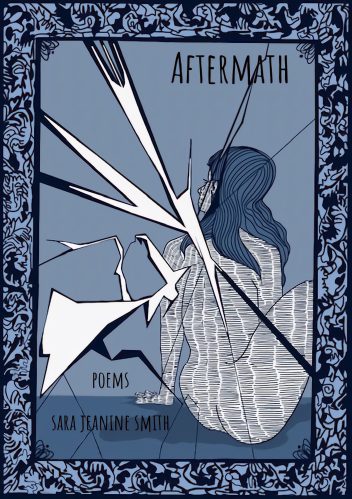
We are excited to announce two new chapbooks from Sara Smith and Chris Murphy! Come join us for a book release party! There will be lots of whooping, hooting, and hollering, along with wine and snacks. It’s a celebration of these authors and their exceptional work. Both books will be available to purchase, and the authors are happy to sign copies. 

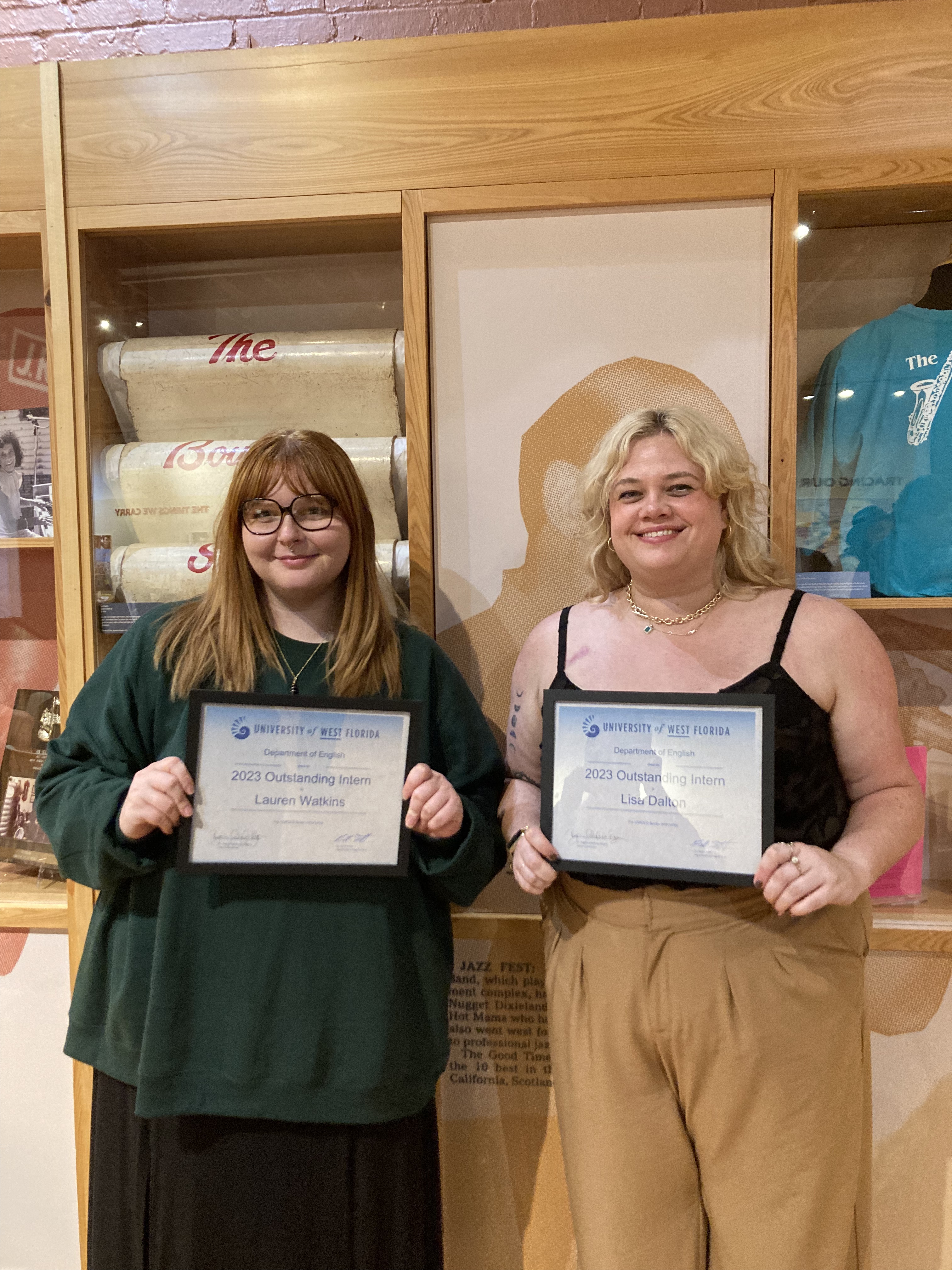
This event is doubling as the University of West Florida’s English Intern awards. The interns have been working hard this semester and we are excited to showcase what they’ve been up to. We hope to see you there!

Here’s a look at both of the books, available to buy on Amazon. You can click the image and it will take you to the Amazon page where the books are for sale, or you can search the books using the title and the author’s full names.

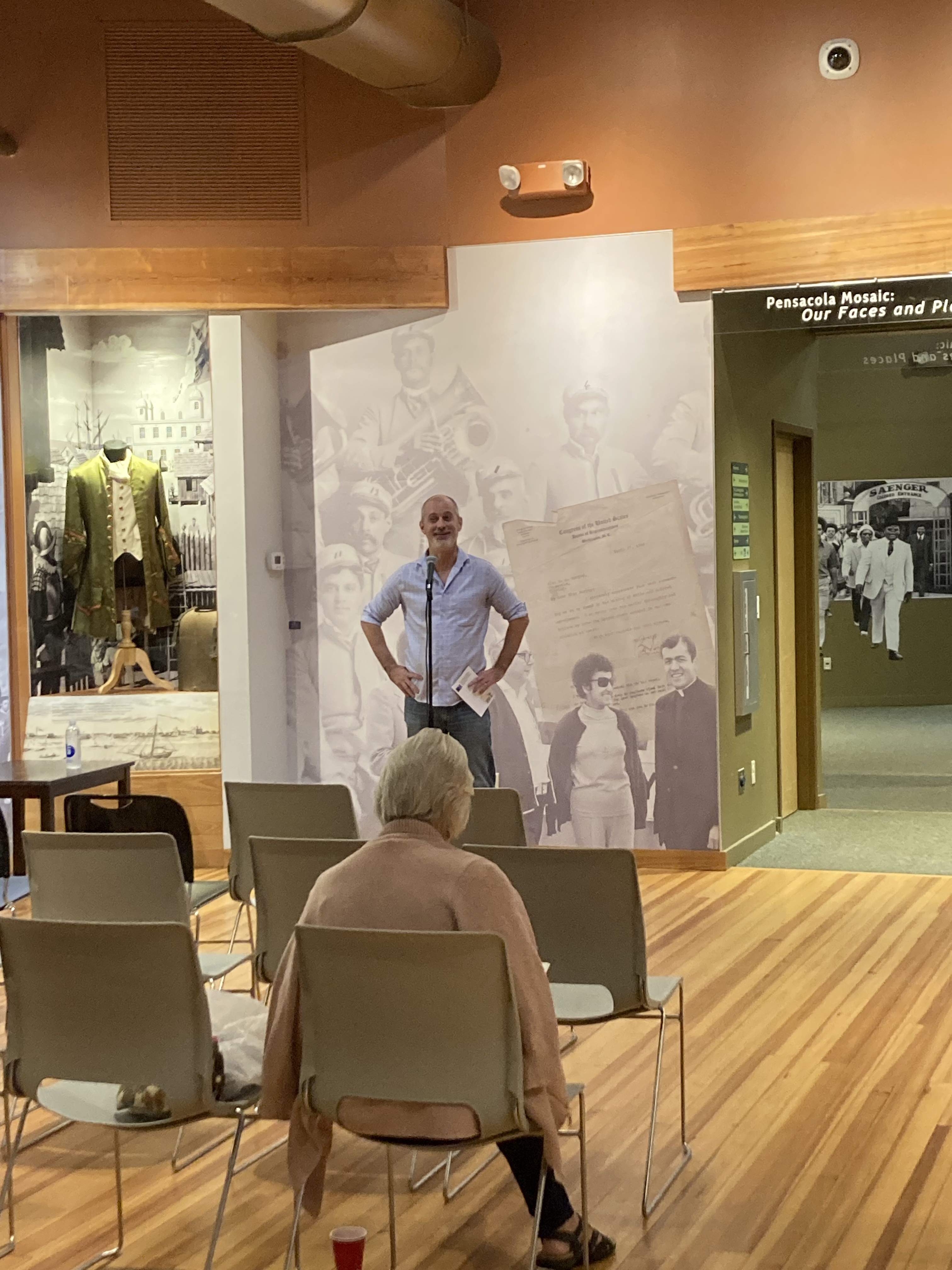
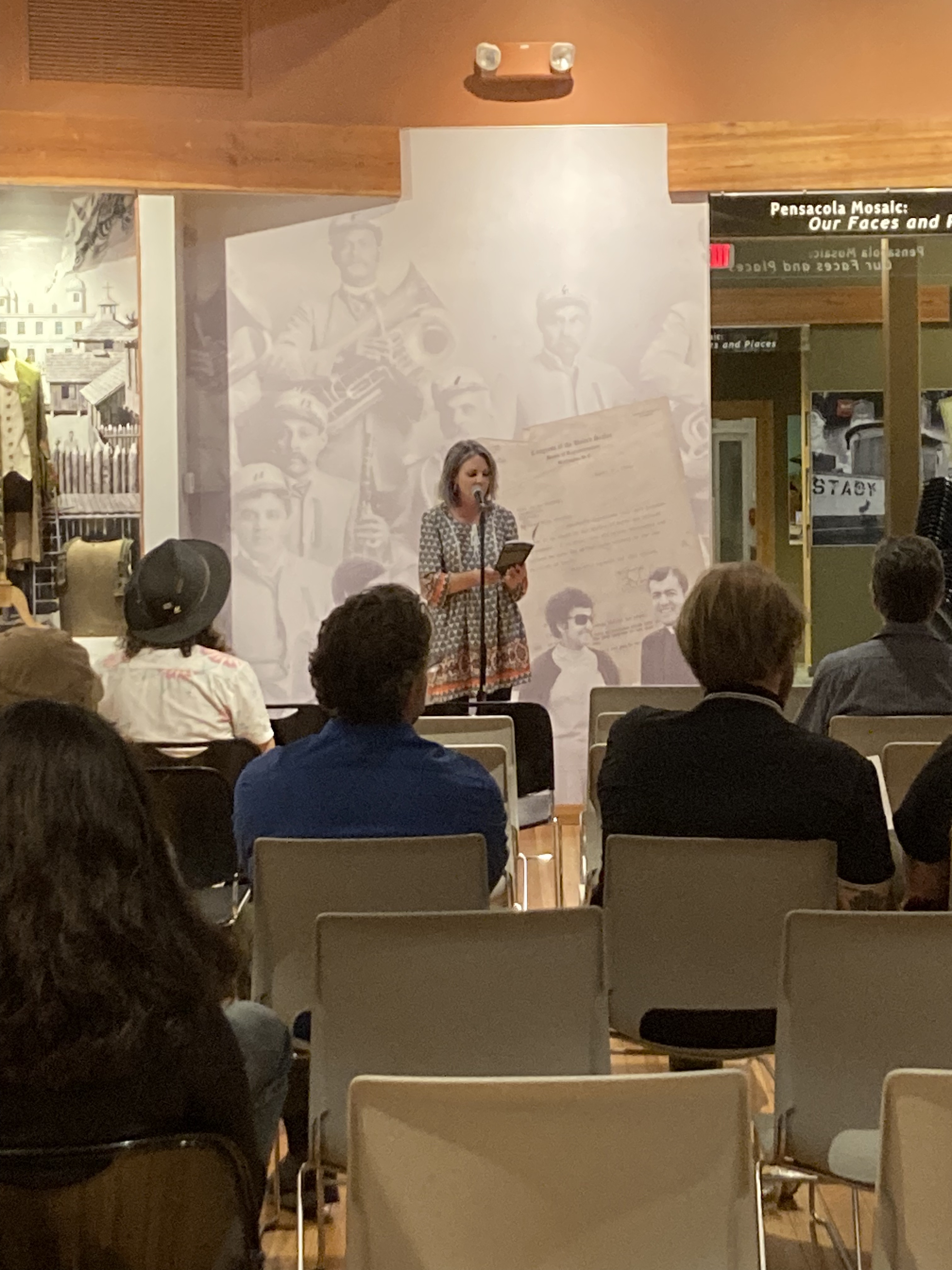
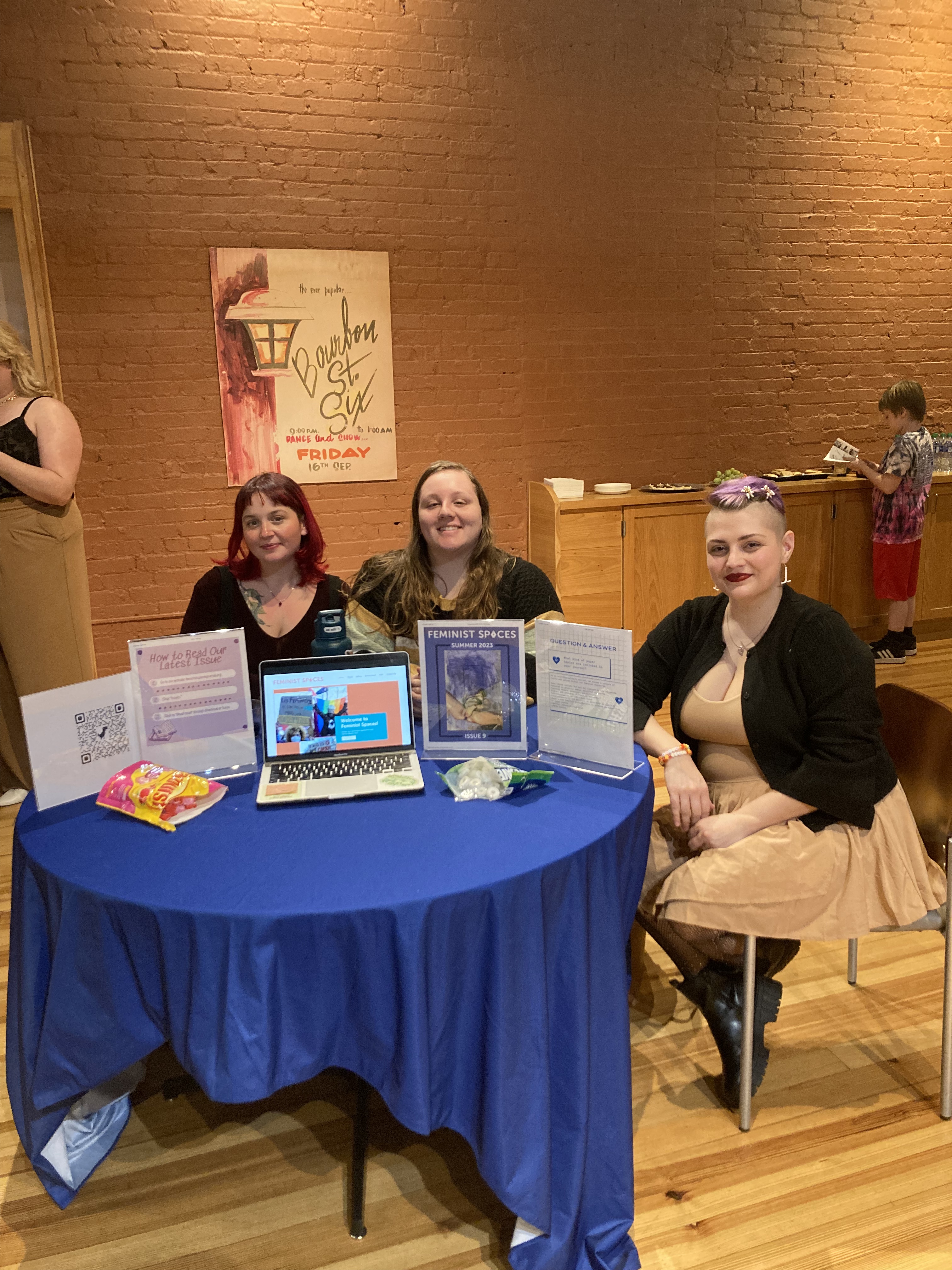
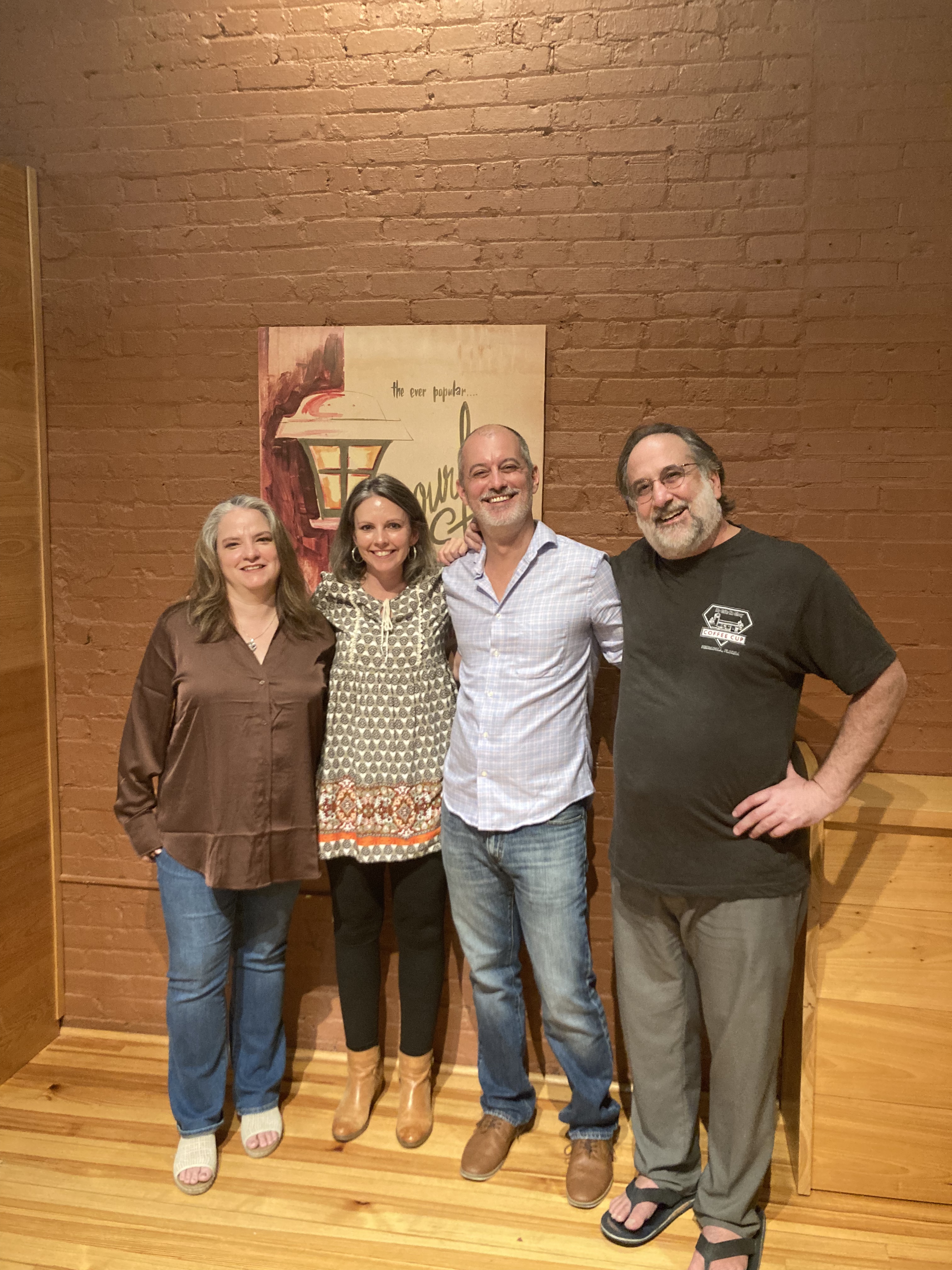
Here’s some photos from the event!

EDVID: What on earth is Black Mountain College?

“What on earth is Black Mountain College?” is a 10 minute film of an on-site interview (2011) with, Program Director of the Black Mountain College Museum+Arts Center, Alice Sebrell. The interview is conducted by poet, Chris Pappas.

Pappas is the Managing Editor of Mêlée Live and the Co-Founding Editor of USPOCO BOOKS, with his wife, Rebecca Pappas.

This is the first video in the new EDVID Series, a line of educational videos on the arts to be produced by USPOCO BOOKS and distributed by uspoco pirate video.

“What on earth is Black Mountain College” is meant to briefly introduce Black Mountain College to students high school age and up. This video is suitable to be used in college classrooms or by homeschooling parents, as well.

The interview gives a brief history of the college, as well as a context for its formation, its existence and its closure. There is also some discussion of how the idea of Black Mountain College still remains, and permeates the worlds of American art, poetry and beyond to this day. Even those already familiar with the history and purpose of Black Mountain College may find something new of use here.

The video may be embedded  on any website and distributed as needed for educational purposes.

Please email The Editors of USPOCO BOOKS at uspocobooks@gmail.com for more information on the EDVID Series or to obtain a free 30 minute lesson for use with this video. The video and the lesson may comprise one 40 minute class session.

Let us know if we can help prepare you to teach.

The Editors